- The Briefing Memo from The Venture Dept.
- Posts
- The Briefing Memo from The Venture Dept.
The Briefing Memo from The Venture Dept.
November 2025

The Briefing Memo
November 2025 - If you’re new here, welcome to The Briefing Memo, which features the latest insights and updates from The Venture Dept., the friendly former regulators on the cap table. If this newsletter has been forwarded to you, you can subscribe here.
Regulatory Developments - Is Christmas Coming
Congress is circling market structure
The world, especially those of us in the crypto space, got Christmas in July when the GENIUS Act was passed into law, ushering in a new age for builders and investors. We’ve seen a flood of new ideas from founders that see the future is bright in the U.S. for stablecoins, with the increasing conviction that crypto is here to stay.
What we’re all looking for next is for Congress to act on a market structure bill. The House passed the CLARITY Act, but the Senate (now back in session after the long government shutdown) seems split over how to react. Two competing bills have arisen, one by the Banking Committee, and one by Agriculture.
Many Democrats are finally(!) on board with crypto, and are actively participating in shaping the coming legislation. We saw the thawing on the Blue side of the aisle, really beginning last year with Congress’s passing a resolution to undo SEC Staff Accounting Bulletin 121, when many Dems voted to overturn in both chambers, with 21 of them voting for an override of President Biden’s veto. (Weren’t we all happy, though, when the SEC pulled it?) Our read is that Democrats see that very few voters are driven by anti-crypto sentiment, crypto funding is reducing partisan divide, and elected officials appear positioned to help turn the U.S. into a crypto powerhouse.
While it’s unclear what the final market structure act will eventually look like, we hope it will arrive before the midterms. Congress has been highly unproductive (only 34 bills passed by the 119th Congress as of this writing), but we are heartened by the continuing trend of bipartisanship in this area. Senate Banking Chair Tim Scott (R-SC) announced that he hoped the Senate would vote on passing a market structure bill in December. We hope this results in our industry’s best Christmas ever.
The SEC is smoothing the path
In a November 12 speech, SEC Chair Atkins laid out the SEC’s evolving strategy toward digital assets. He emphasized two guiding principles: first, that securities law applies regardless of whether an instrument is tokenized, and second, that the economic reality of a transaction dictates legal treatment. Atkins stated the lack of a clear taxonomy and regulatory certainty has left market participants in the dark, hindering innovation and prompting migration offshore. We, of course, agree.
Central to the speech was the introduction of a token taxonomy: a structured way to classify crypto-assets into categories like digital commodities, digital collectibles, digital tools, and tokenized securities. Sufficiently decentralized networks may not be securities, an idea Bill Hinman floated an aeon ago. We’re hoping this time it sticks.
Looking ahead, Atkins signaled the SEC staff are preparing recommendations for tailored frameworks: offering exemptions for certain token offerings, enabling trading on non-SEC platforms (like those regulated under the CFTC or state regimes), and supporting legislative efforts in Congress for market-structure reform. This all sure makes for a nice stocking-stuffer.
The Venture Dept. Updates
Matt has been making the rounds on the speaking circuit. He gave advice to an audience at DC FinTech Week, as part of a panel on making the move from a regulator to the startup space. Among other pearls of wisdom he provided, move to New York! He also spoke at Money20/20 on a provocatively titled panel, “financial regulation is the ultimate growth engine.”
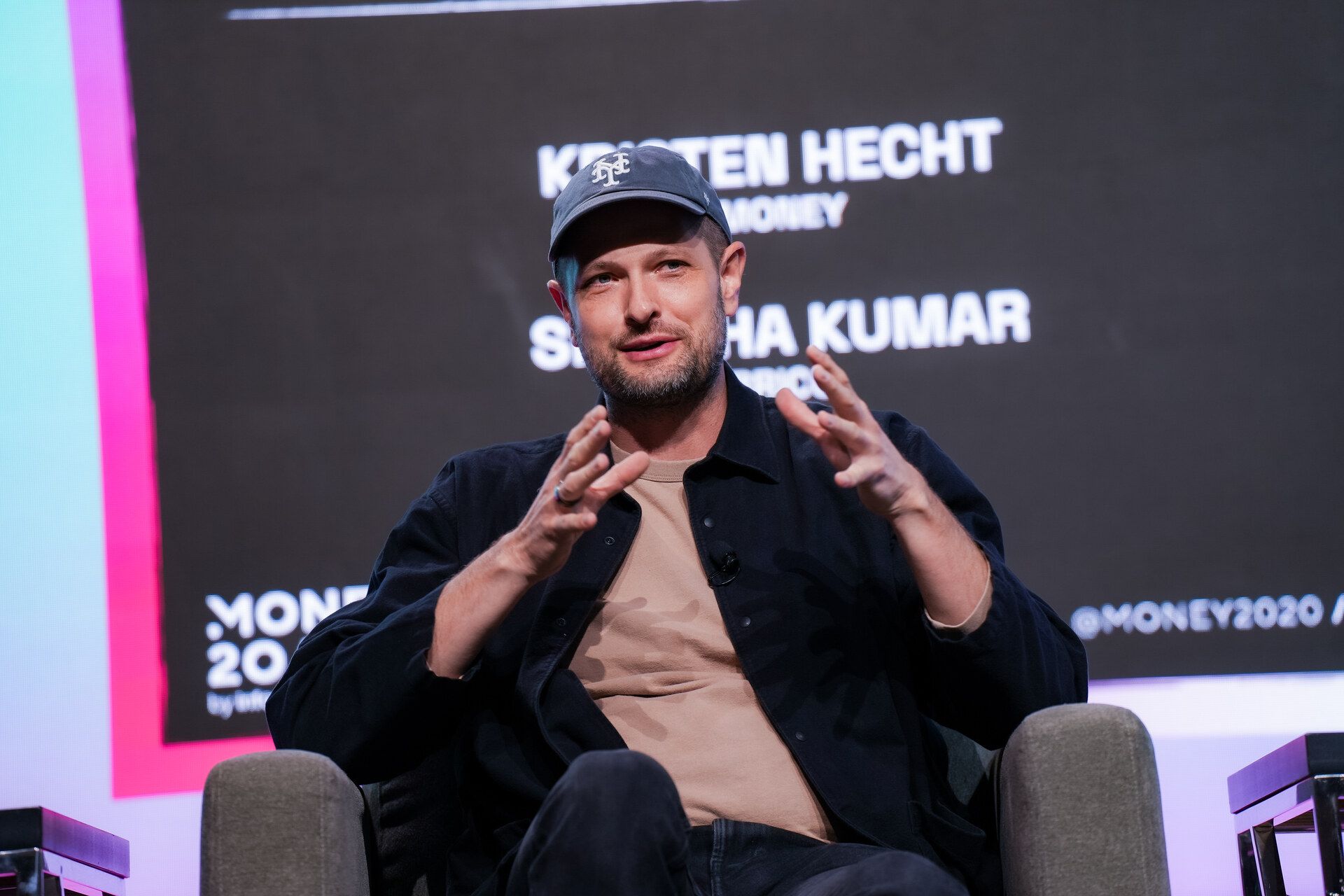
Matt moderated a panel at StableConnect (organized by The Financial Club) for banks and credit unions about opportunities in stablecoins. And he spoke to stablecoin founders about fundraising strategies as part of an excellent session put together by our friends at Utila.
He also spent time with one of our favorite founders, Will Beeson of Uniform Labs, on his Rebank podcast discussing the future of the industry (Will also found time to talk to another founder, Nikhil Raghuveera of Predicate, about bridging the gap between DeFi and regulated onchain finance.)
For our ongoing Founders Spotlight series for Dept. LPs and Advisors, Matt interviewed Davis Hart of Omnia about the progress they’re making and some insights into how financial institutions are approaching stables. We are hosting our next Founder Spotlight on December 16, where we’ll talk to Will Beeson (again!), and dig deeper into Multiliquid.
News
As backdrop, we’ve been speaking over the last several weeks to some of the biggest and smallest banks in the US. It’s been an interesting view into how TradFi is approaching the coming sea change and there are a variety of views. For the smaller banks, this is a time of deep uncertainty about what’s ahead. Many have expressed that they are novices; a repeating refrain in the key of, “I just heard of stablecoins.” Those players are just opening their eyes in a fast-moving space that takes significant time to learn. Welcome to the party, folks!
At the other end of the spectrum, we see banks that have been investing, hiring, and building and that hard work is starting to show results. All over the place this month, TradFi is putting their money where the crypto is.
If someone told you in June 2023 (keep the date in mind for later) that Morgan Stanley would in 2025 issue a $100mm bitcoin product, you’d punch them right in the mouth. Who could believe such nonsense? They’d be right to punch you back now, wouldn’t they?
We would not have been as surprised about Fidelity’s putting $200mm into an ERC-20 money market fund (with BNY serving as custodian), and it’s good to see. BNY itself is getting also getting into the tokenized MMF game with its Dreyfus institutional Stablecoin Reserves Fund. UBS is also innovating, with the announcement of its first live tokenized fund transaction. BlackRock knows where this is headed: “We are not spending enough time talking about how quickly we're going to tokenize every financial asset. . . . It will be changing the technology around the plumbing of finance." We’re talking about it, Larry Fink!
The Fed is providing new frameworks, with plans to have its streamlined payment account infrastructure live by late 2026, which could lead to lower barriers to real-time account-based payments and the FDIC is exploring digital deposit insurance. Fingers crossed. On the other side of the pond, the ECB is worried that stablecoins will disrupt banking models and Euro-area financial instability. Definitely agree with the first thought, and it seems like the second is some Halloween-is-over-but-I-still-want-to-scare-people stuff. Advantage, United States.
For a deeper dive on what’s coming, check out this piece on how the FX market is changing due to stablecoins. Tl;dr is that it’s still expensive to conduct FX on the new rails, but the difference is compressing.
Listening List
If you’re curious about how the White House has been thinking about the market structure bills and where we’re going, this is a particularly interesting dive. And, wow - how does this happen? A 16-year-old gets to interview Jeff Yass from Susquehanna. While there’s a lot on prediction markets and other developments, Listen all the way through, as Jeff provided the host some great romance advice, which I think we all could have been advantaged to hear when we were teens.
Eating Your Words: Crypto Ain’t Dead
Recently, we came across an article from The Atlantic, one of the oldest and most respected publications in these United States. Is Crypto Dead?, asks the article from June 2023 (remember?). The answer given is, as you might image, “yes.” But how “yes”? Very yes:
Crypto boosters’ grandest vision—of digital currencies changing everything, . . . supplanting Wall Street and Main Street, and remaking the web as Web3—does seem over. Crypto is a trillion-dollar global asset class. Crypto is also a fringe industry that is offshoring and shrinking and growing more fringe, not one innovating alongside and outcompeting Big Finance.
We disagreed then: Matt had just launched the fund, cutting his first check just two months before the article dropped. He wrote that check to Bridge. We’re investing for the long run.
(Makes me want to cancel my subscription.)

Disclaimer: The information in this newsletter is provided solely for general informational purposes and reflects the author’s personal views at the time of publication. Nothing herein should be construed as investment advice, legal advice, or a recommendation to engage in any transaction or strategy. Readers should consult their own professional advisors before making any financial, legal, or other decisions. All information is provided “as is,” without any representation or warranty of any kind.