- The Briefing Memo from The Venture Dept.
- Posts
- The Briefing Memo from The Venture Dept.
The Briefing Memo from The Venture Dept.
March 2026
The Briefing Memo
March 2026 - If you’re new here, welcome to The Briefing Memo, which features the latest insights and updates from The Venture Dept., the friendly former regulators on the cap table. If this newsletter has been forwarded to you, you can subscribe here.
We were very proud to host an intimate lunch with OCC Comptroller Jonathan Gould in New York recently. Our portfolio company founders, a few LPs, and your intrepid venture capitalists sat to discuss the OCC’s views on the future of finance.

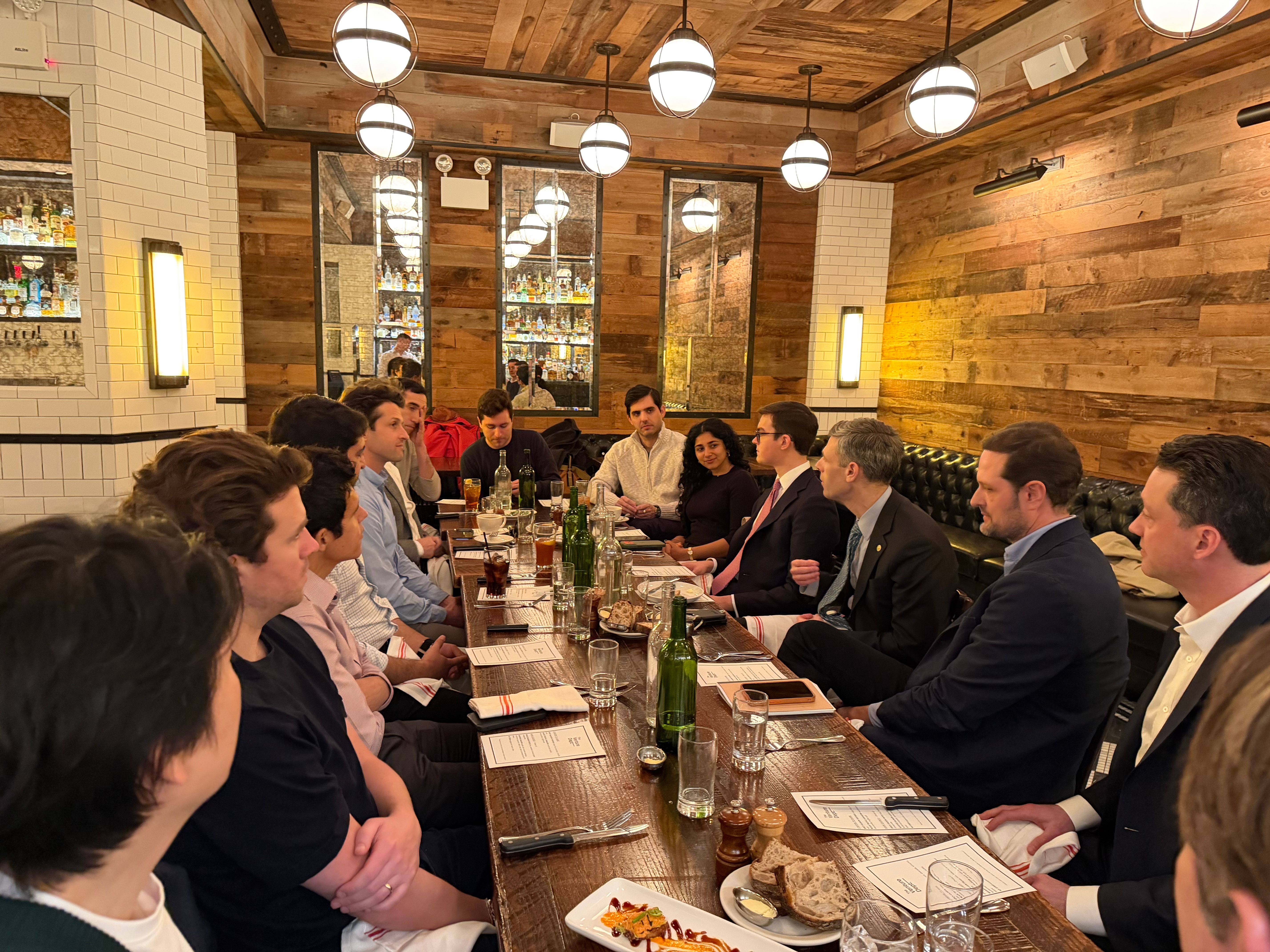
Comptroller Gould walked us through OCC rulemaking, national chartering, and the overall landscape of stablecoins and the crypto landscape from his perspective. We appreciated the opportunity and so did the crowd. See more on the OCC below in Regulatory Developments.
Company Updates
Last month, Fortune featured one of our newest portcos, Rhythmic, which enables businesses to embed stablecoin infrastructure, with things like cards and rewards. Now they’ve gotten a big shoutout on the Not Fintech Investment Advice podcast from FinTech Takes. Brands are waking up to the idea of stablecoins and Rhythmic, which is “a nice, elegant solution,” per the podcasters, for what they need.
Speaking of Fortune, it has named portco Superstate as a “compliant disruptor” as it moves to bring Fortune 500 securities on-chain. Gonna get a “Compliant Distruptor” tattoo. Additionally, Superstate has partnered with Invesco to bring a suite of institutional-grade funds onchain, marking one of the clearest signals yet that traditional asset managers are leaning into tokenized distribution. The collaboration will see Invesco’s products issued via Superstate’s infrastructure, enabling programmable ownership, faster settlement, and broader accessibility. If you were waiting for a TradFi heavyweight to validate the model, this is it.
Stable Sea has announced a partnership with BitGo, with Stable Sea layering its B2B treasury workflow tooling on top of BitGo’s federally-chartered custodial wallets, insurance (up to $250mm), and access to regulated digital asset services. Ad astra.
Squid Router is live on the Tempo blockchain, which brings to the table institutional-ready settlement and no gas fees. Mastercard and Klarna, among others, are already on Tempo, and Squid will enable users to swap into Tempo’s native token, cleanly and securely.
Etherfuse launched its FX product, allowing corporates to exchange USD for MXN for a tenth of what it would cost to make the trade on TradFi rails. This is a 24/7 offering that goes from costing you $35,000 for $1mm in exchange, down to just $3,000. That’s real money, real savings, real easy.
Dept. Updates
Matt headlined a panel at Credit Reimagined, a half-day, very select conference hosted by portco Valinor and Avalanche. A fascinating day, delving into how TradFi is making its way into the on-chain credit space.
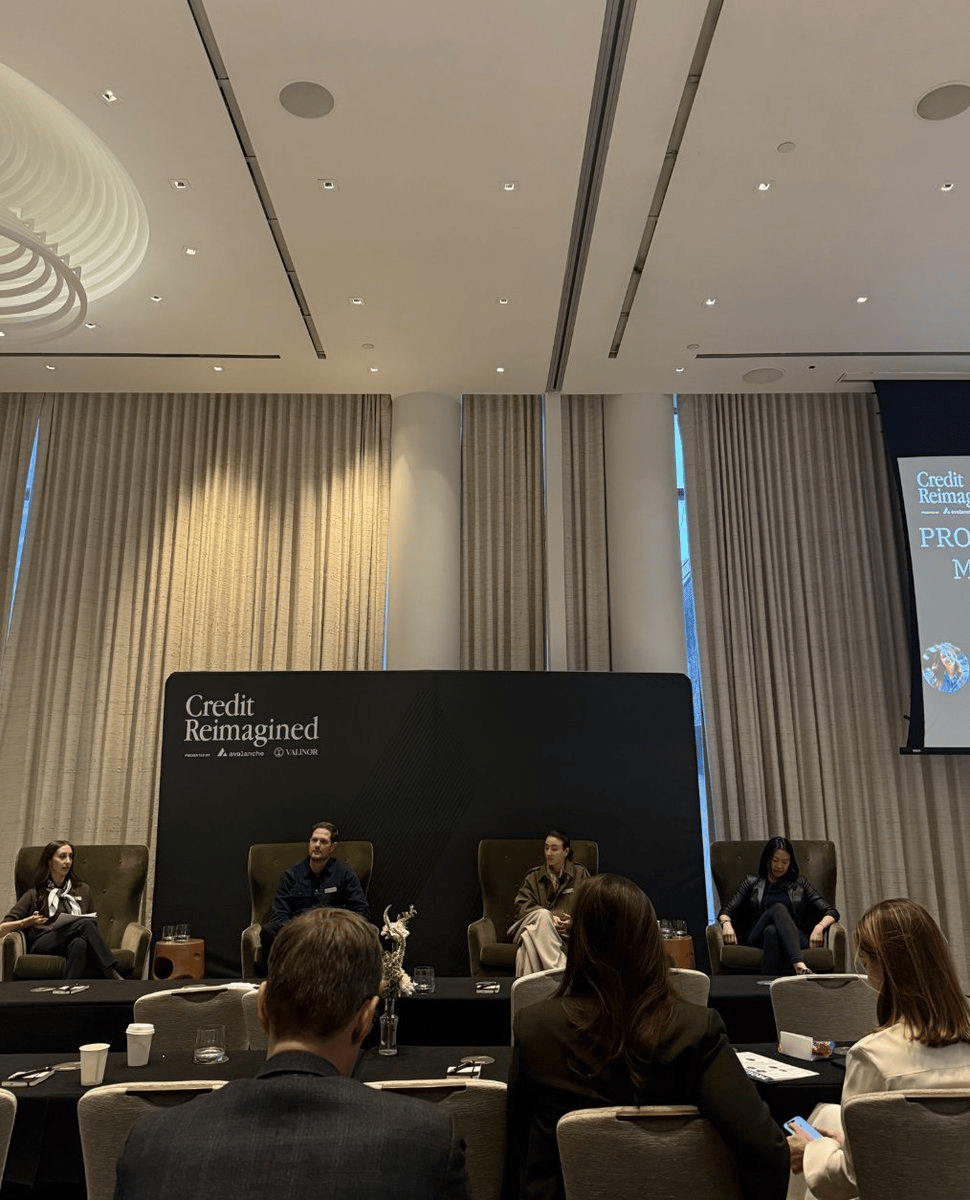
As an aside, it was about the fanciest conference we’d been to.
As discussed, TVD continues its road trip. If you go to Buffalo, you gotta find a Buffalo (which we did):

Big props to Lucky Day restaurant in downtown Buffalo. You can’t get wings (fine) but you can get some really good eats. Also an impressive brown liquor list, if you swing that way. Thanks to M&T Bank for their hospitality and a chance to dig in with a major regional bank on what they’re doing to move forward in the space.
Matt and Jon also headed down to Philly (suburban Philly, anyway). And what do you do when you’re there? You get cheesesteaks.

Good stuff to be found at Philly Cheesesteaks & Luigi’s Pizzeria in Berwyn, PA.
Where will we go next? DC in April, and Miami, Amsterdam, and Milan are on the docket for May, and expect racking up even more airline and rental car miles as the year goes on.
Regulatory Developments
The OCC has recently issued its notice of proposed rulemaking (NPR) coming out of GENIUS. It’s a tome - 376 pages in the Federal Register - and includes 211 questions (most with many sub-questions) that will help shape the final rule. Part of the NPR severely restricts stablecoin yield payments, which the banks have been clamoring for since GENIUS passed (and which is helping bog down the market structure act). The Venture Dept. posits that this kerfuffle is sound and fury signifying nothing: The technology already exists to make yield essentially irrelevant. One can already get the risk free rate from tokenized money market funds and other products and switch instantly at the moment of transfer back into stablecoins. Stop arguing! If you want to go deep on the NPR, our friends at portco Circuit put together a nice piece explaining it all.
Some more big news from the SEC, which provided an Interpretive Release on the Federal Securities Laws to Certain Types of Crypto Assets and Certain Transactions Involving Crypto Assets. (I know they could have gotten that word count down on the title.) The Commission owned up to failing “to develop a tailored regulatory framework” before now, but as we’ve been talking about in the Briefing Memo, that’s starting to take shape. The interpretation provides a token taxonomy, addresses how a crypto asset can become (or stop being) a security, and information on applying the Federal securities laws to things like mining, staking, and wrapping non-security crypto assets. In short, most things aren’t securities, except securities. (Who knew?) Non-securities crypto assets can become subject to securities laws if they meet the Howey test: Inducing investment in a common enterprise with promises to undertake managerial efforts from which a purchaser would expect profit. In one example, if the promise is to create a decentralized system, it will become decentralized for the SEC’s purposes here if that promise is achieved based on how the issuer described it would eventually reach decentralization in steady state. At that point, it’s a digital commodity and it enters the CFTC’s ambit. “After more than a decade of uncertainty, this interpretation will provide market participants with a clear understanding of how the Commission treats crypto assets under federal securities laws.” Thank you, Chair Atkins.
The CFTC issued a no-action letter to Phantom for routing users to regulated derivatives markets, treating it as a passive interface rather than a broker. Users interact directly with registered exchanges while Phantom simply provides the front end, allowing the wallet to expand without registration, so long as it maintains disclosures, compliance policies, and recordkeeping. The relief is narrow (excluding DeFi derivatives and prediction markets), but it signals a clearer regulatory line emerging around non-custodial software that doesn’t touch user funds.
The SEC and CFTC continue their kumbaya moment, with Chair Atkins delivering a speech on the agencies’ “regulatory harmony.” Among other things, he discussed “super-apps” to allow users a one-stop-shop experience when investing in US public markets. This should allow for streamlined regulatory compliance, with overlapping requirements being singly satisfied.
Definitely maybe possibly this time the Senate will finally give us a market structure act. We’ve been waiting for this for months (and really, years) for this to happen. Sen. Tim Scott (R-SC), the Banking Committee Chair, thinks it will be all wrapped up by soon. While we’re not holding our breath, as of this writing, Polymarket has the bill’s chances at 67%, which is about the middle of the trading range since January. The government still isn’t fully funded, Trump wants the SAVE America Act done before anything else, and the Senate is about as divided as its ever been. That said, there’s a real drive to get this done and lots of crypto money being thrown around in Washington. Place your bets.
News
Mastercard is acquiring stablecoin infrastructure provider BVNK for $1.8bn. This will marry BVNK’s on-chain payment rails to Mastercard’s global fiat network. This comes on the heels of ICE’s investing in OKX at a $25bn valuation. Always nice to see some fat valuations being realized in this space. Keep buying, everyone!
A double dose of Kraken this month. First, it’s partnering with Nasdaq to offer tokenized stock trading. Kraken will be Nasdaq’s distribution partner here, enabling 24/7 trading to investors around the world. Also, the Fed (KC) approved Kraken for a Fed master account. This is big because it’s been a major chokepoint for crypto companies trying to operate like traditional financial institutions and this is the first time we’ve seen this happen. Seems surreal after the Custodia fight.
The Canton network reached an important milestone, completing a cross-border repo transaction between tokenized gilts and GBP, with risk terms and embedded payments baked in through a smart contract. This is a $2tn market; the efficiency and transparency gains by getting on-chain are overwhelming and we see, obviously, a long term trend towards this model.
The SEC granted Friend-of-the-Fund WisdomTree approval to trade its onchain money market fund 24/7, allowing instant settlement, not end-of-day NAV. “This is a true innovation and improvement in the investor experience, and it demonstrates how blockchain can serve as a new set of rails for capital markets,” says WisdomTree’s Will Peck. This is another building block for the on-chain market.
In litigation news, the Southern District of New York has dismissed a class action suit against Uniswap, holding that you can’t sue someone over software. “Plaintiffs are basically alleging that Defendants substantially assisted fraud by providing ordinary services that anyone could use for lawful purposes, but that some used for unlawful purposes. Such an argument fails for the same reasons why a bank does not substantially assist a money launderer who washes his cash through the bank’s accounts, and why WhatsApp does not substantially assist a drug dealer who coordinates a sale on its messaging service: Simply providing the platform on which a fraud takes place is not the same as substantially assisting that fraud.” Makes sense to us.
Listens and Reads
Our buddies Johnny Reinch and Charlie Yoo hosted The First Trillion podcast and had Olivia Vande Woude on from Avalanche to discuss Galaxy’s onchain CLO. They’ve been able to collapse a cumbersome stack while maintaining the checks around such a deal. Watch this space (and the podcast).
If you’re looking for a dive into the history of how stocks settle, and where things are headed, Superstate has put out this piece, which is worth the read. In short, we’re moving from a slow, antiquated system to one where settlements are atomic, share registers are updated instantly and immediately, and severely reduced reconciliation and settlement fails.
Disclaimer
The information in this newsletter is provided solely for general informational purposes and reflects the author’s personal views at the time of publication. Nothing herein should be construed as investment advice, legal advice, or a recommendation to engage in any transaction or strategy. Readers should consult their own professional advisors before making any financial, legal, or other decisions. All information is provided “as is,” without any representation or warranty of any kind.
Like coffee. Just smarter. (And funnier.)

Think of this as a mental power-up.
Morning Brew is the free daily newsletter that helps you make sense of how business news impacts your career, without putting you to sleep. Join over 4 million readers who come for the sharp writing, unexpected humor, and yes, the games… and leave feeling a little smarter about the world they live in.
Overall—Morning Brew gives your business brain the jolt it needs to stay curious, confident, and in the know.
Not convinced? It takes just 15 seconds to sign up, and you can always unsubscribe if you decide you prefer long, dull, dry business takes.